If you’ve ever thought of leftover food or coffee grounds as trash, it’s time to think again. Right here in Indiana businesses are turning organic waste into a valuable resource through regenerative farming, and Caldwell’s is at the heart of it.
By collecting organic waste from restaurants, businesses, and farms, and processing it at our compost facility, Caldwell’s helps local partners hit sustainability goals while producing nutrient-rich compost that improves soil health and crop yields. If there’s one thing you remember from this post, it’s this: waste can become a resource.
Whether you run a restaurant, manage a business, or are just curious about sustainable farming, this guide will show how turning food waste into compost supports regenerative farming and why this is the future of agriculture in Central Indiana.
What is Regenerative Farming?
Regenerative farming isn’t just about planting crops; it’s about healing the soil, boosting biodiversity, and creating systems that sustain themselves naturally. Instead of relying heavily on chemical fertilizers and growing the same crops year after year, regenerative agriculture looks at the whole ecosystem: soil, plants, water, animals, and even waste.
At its core, regenerative farming turns what would be trash into a resource. Organic waste, like food scraps from restaurants and grocery stores, can be composted and returned to the land, feeding the soil naturally. This not only improves crop growth but also helps farms become more resilient, productive, and environmentally sustainable.
In Shelby County, local farmers are already seeing the benefits. By incorporating compost from Caldwell’s into their fields, they’re improving soil structure, increasing yields, and reducing dependence on synthetic fertilizers.
Step 1: Collecting Organic Waste: Partner with Caldwell’s
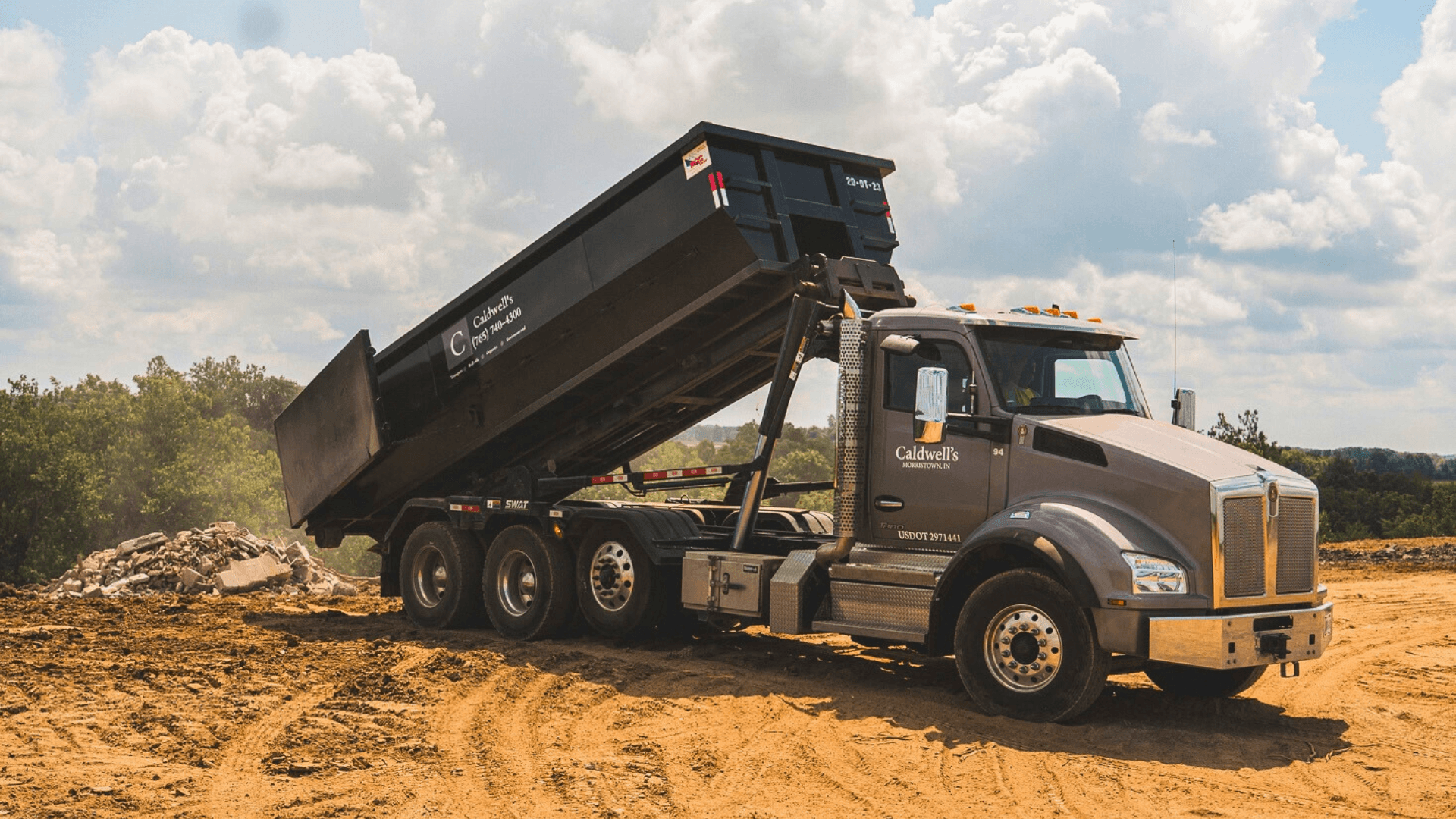
The first step in this process is collecting organic waste. Caldwell’s works with restaurants, grocery stores, and other businesses across Central Indiana and in the Midwest to gather food waste, everything from vegetable scraps to coffee grounds.
By partnering with Caldwell’s, businesses don’t just reduce landfill waste; they hit their sustainability goals. This partnership creates a system where waste is repurposed to grow healthier crops, helping the environment and local communities at the same time. Learn more about our Organic Waste Division HERE
Practical Tip: Businesses looking to start recycling food waste can reach out to Caldwell’s today. Collection is easy, and you’ll know your organic materials are being used to support regenerative farming right here in Central Indiana.
Step 2: Processing Waste at the Compost Facility
Once collected, the organic materials are brought to Caldwell’s compost facility, where they’re carefully processed. This step is crucial; composting isn’t just letting food scraps rot. It requires controlled temperatures, moisture management, and proper aeration to produce high-quality, nutrient-rich compost.
Farmers in Shelby County who use this compost see a dramatic difference. Soil becomes more fertile, crops become more resilient, and long-term productivity improves. By processing waste at a dedicated facility, Caldwell’s ensures compost is effective and ready to return nutrients to the land.
Practical Tip: Partnering with a facility like Caldwell’s removes the complexities of composting while contributing to regional sustainability.
Step 3: Using Compost and Cover Crops
Compost produced isn’t just fertilizer; it’s a soil-building tool. When applied to fields, it provides slow-release nutrients that feed crops naturally. Pairing compost with cover crops, such as clover or rye, helps protect soil from erosion, increase organic matter, and encourage beneficial microbes.
Farmers in Central Indiana are already seeing the results. Corn and soybean fields in Shelby County that use Caldwell’s compost are healthier, retain water better, and have improved yields, all without heavy reliance on synthetic fertilizers. Read more about our composting+farming HERE
Practical Tip: Even backyard gardeners can apply these principles. Compost and cover crops improve soil health and make gardens more productive over time.
Step 4: Reducing Synthetic Fertilizers and Increasing Yields
One of the biggest advantages of using compost is less dependence on synthetic fertilizers. While chemical fertilizers provide nutrients quickly, they can degrade soil health over time. Compost enriches the soil naturally and builds long-term fertility, creating more resilient crops.
In Central Indiana, farmers see real benefits. Fields amended with compost are more drought-resistant, less prone to disease, and produce higher yields. Investing in soil health today ensures a sustainable and productive future for farms in.
Practical Tip: Apply compost to one field or garden section and watch how it improves soil and crop growth over the season.
Why This Matters for Sustainability
Caldwell’s collection and processing of organic waste is about more than farming; it’s about regional sustainability. Diverting food waste from landfills reduces greenhouse gas emissions and supports communities’ environmental goals.
Every banana peel, coffee ground, or leftover salad has a purpose. Collected today, it becomes compost tomorrow, and that compost feeds crops, restores soil, and strengthens local food systems.
Practical Tip: Encourage businesses, schools, and restaurants in your area to partner with Caldwell’s. The more organic waste collected locally, the greater the positive impact.
How You Can Make a Difference
You don’t have to own a farm to participate. Here’s how you can help Central Indiana move toward regenerative farming:
-
- Partner with Caldwell’s for Organic Waste Collection: Businesses can divert food waste to support soil health and sustainability goals.
- Start Recycling at Home: Even small amounts of food scraps can make a difference when collected and composted properly.
- Think Beyond Corn and Soybeans: Supporting farms that use regenerative practices strengthens the local food system.
- Plant Cover Crops or Compost Gardens: Even a small backyard garden benefits from compost and cover crops.
- Educate Others: Sharing the benefits of regenerative farming spreads awareness and increases participation.
Remember, regenerative farming takes planning and effort, but the rewards for soil, crops, and the community are worth it.